期刊首页 在线期刊 专题
专题
棉花
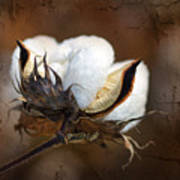
棉花,是锦葵科(Malvaceae)棉属(Gossypium)植物的种籽纤维,原产于亚热带。植株灌木状,在热带地区栽培可长到6m高,一般为1~2m。棉花产量最高的国家有中国、美国、印度等。 棉花是世界上重要的经济作物之一,在中国及世界经济发展中占有重要地位。 我国已形成了长江流域、黄河流域和以新疆为主的西北内陆三大棉区。 新疆因其独特的自然生态条件和资源禀赋, 已成为了我国最大的商品棉基地、国内唯一的长绒棉生产基地和世界重要的棉产地。
期刊
出版年
栏目
Please wait a minute...
  • 全选
    批量引用 |
  • 于秋月
    中国农学通报. 2025, 41(36): 43-50. https://doi.org/10.11924/j.issn.1000-6850.casb2025-0242

    本研究旨在研究膜下滴灌灌水定额对北疆棉花生长发育、耗水特性及产量的影响,为该区域棉花生产的节水、增产、增效提供理论依据。试验于2022—2024年通过设置4种不同灌水定额:30.0 mm(I20)、37.5 mm(I25)、45.0 mm(I30)和52.5 mm(I35),探究不同滴灌定额对棉花生长指标、耗水规律及产量的调控效应。结果表明,随灌水定额的增加,棉花株高呈增加趋势,在I30和I35处理下达到峰值;而叶面积指数(LAI)和叶绿素相对含量(SPAD)呈先升后降趋势,峰值均出现在I30处理。棉花各生育阶段耗水量及作物系数均随灌水定额的增加呈上升趋势。棉花籽棉产量和皮棉产量随灌水定额的增加呈先增加后降低的趋势,其中I30处理产量最高,平均值分别为5535.35 kg/hm2和2348.42 kg/hm2。耗水量-产量的拟合分析表明,适宜耗水量范围为491.93~571.61 mm。综合评价结果表明,I30处理在3个生长季的综合评分均最高。综上,I30处理可实现北疆滴灌棉花产量最优,研究结果可为北疆棉花节水高产栽培提供理论依据。

  • ZHANG Man, ZHANG Jiaqi, CHEN Yujie, WU Yixuan, SHI Yang, XING Haiyan, CHEN Xiaojiao, WANG Baomin
    Journal of Cotton Research. 2025, 8(03): 30. https://doi.org/10.1186/s42397-025-00237-x
    Background Mepiquat chloride (MC) is a widely used plant growth regulator in cotton (Gossypium hirsutum L.). It regulates endogenous hormone content and crosstalk to control plant height and promote lateral root (LR) development. However, the roles of cytokinins (CTKs) in the MC-induced increase in LR number in cotton seedlings remain unclear. Therefore, in this study, whole-genome transcriptome analysis was performed to elucidate the molecular mechanisms, CTK transformation, and CTK signaling pathway response to MC in cotton roots.
    Results In the present study, MC reduced the contents of the active CTK trans-zeatin (tZ) and N6-isopentenyladenine (iP) but increased the levels of the nucleoside CTK trans-zeatin riboside (tZR) and N6-isopentenyladenine riboside (iPR). RNA-seq data showed that the CTK biosynthesis genes GhIPTs and active CTK catabolism genes GhCKXs were obviously upregulated after MC treatment. The CTK-activating enzyme gene GhLOGs was repressed compared with the control. Furthermore, MC inhibited the expression of GhAHK4 and GhARR2/12, which are involved in the CTK signaling pathway, and activated the IAA-IAA14-ARF7/19 signaling module. Meanwhile, MC increased the expression levels of genes involved in sucrose synthesis, the cell cycle, cell division, and cell wall biosynthesis pathways. Silencing the GhCKX family separately decreased the LR number and active indole-3-acetic acid (IAA) level. The expression levels of GhPIN1, GhARF7, GhARF19, GhLBD16, GhLBD18, GhLBD29, and GhLBD33 were downregulated, but GhARR2/12 and GhIAA14 were upregulated. The total content of active CTKs was noticeably increased. The results of silencing the GhLOGs family were opposite to those of silencing GhCKXs. Silencing GhARR12 could upregulate GhPIN1 expression and increase LR number. In addition, the silenced GhCKXs, GhLOGs, and GhARR12 were less responsive to MC-induced LR growth than the control.
    Conclusion These results suggested that MC treatment could upregulate CTK-nucleoside biosynthesis and CTK metabolism genes to decrease active CTK levels, promoting crosstalk between CTKs and auxin signaling pathways to enhance LR initiation.
  • GUAN Jiajia, WANG Yu, TENG Zining, SHI Xinyu, HE Run, CHEN Yuan, CHEN Yuan, CHEN Dehua, ZHANG Xiang
    Journal of Cotton Research. 2025, 8(04): 37. https://doi.org/10.1186/s42397-025-00242-0
    Background Achieving a synergistic enhancement in both the yield and insect resistance of Bt cotton holds substantial importance for boosting farmers' income and ecological advantages. This study investigated the impact of amino acid foliar fertilizer (AAF) on the yield and Cry1Ac protein (CP) content, providing valuable insights for enhancing its productivity and insect-resistance capabilities. In 2021, Sikang 1 and Sikang 3 were treated with AAF once (A1) and water (CK) during the peak flowering stage. In 2022, AAF was sprayed one (A1), two (A2), and three (A3) times, respectively, with CK serving as the control.
    Results Compared with the control, the A3 treatment increased seed cotton yield (SCY) by 16.0% and CP by 40.98% at 30 days after flowering. AAF application enhanced soluble protein content (SP) and glutamate pyruvate transaminase (GPT) activity, while suppressing protease and peptidase activities. Concurrently, AAF improved sucrose metabolism through elevated sucrose content and increased activities of sucrose synthase (SS) and sucrose conversion enzyme (SCE), which were also positively correlated with yield. A lower ratio of carbon-to-nitrogen (C/N) was linked to higher yields and CP content. Path analysis confirmed that SP, GPT, SS, and SCE demonstrated positive effects on CP content and SCY, respectively. Peptidase activity had negative effects on CP and SCY. The C/N ratio had negative effects on SCY and CP, respectively.
    Conclusions Triple foliar application of AAF maintained lower C/N ratios with enhanced carbon metabolism and protein synthesis capacity, thereby simultaneously increasing both Cry1Ac protein content and yield in Bt cotton. These findings provide critical insights for improving both pest resistance and agronomic performance in Bt cotton cultivation.
  • YU Xinghua, ZHOU Mingyan, CHEN Weiming, WANG Yukun, LU Haiyang, WANG Fangyong, DU Mingwei, HAN Huanyong, TIAN Xiaoli, LI Zhaohu
    Journal of Cotton Research. 2025, 8(04): 38. https://doi.org/10.1186/s42397-025-00244-y
    Background Cotton lodging has become increasingly prevalent due to extreme environmental conditions and agronomic practices, severely compromising yield, fiber quality, and mechanical harvesting efficiency. However, research on cotton lodging remains limited, with most studies focusing on individual or isolated indices rather than a comprehensive system. This study systematically compared four lodging-resistant varieties (LR-1, LR-2, LR-3, LR-4) and four lodging varieties (L-1, L-2, L-3, L-4) across multiple indices: morphological traits, boll distribution, internode filling degree, stem density, mechanical strength, anatomical structure, and chemical composition.
    Results The results showed that at the boll-opening stage, lodging-resistant varieties exhibited higher density in the first (increased by 11.6%) and third (increased by 23.5%) basal internodes compared with lodging varieties and significantly greater filling degree in the first (increased by 22.6%), second (increased by 23.1%), and third (increased by 26.1%) basal internodes; significantly higher stem puncture strength (increased by 41.2%) and stem bending resistance (increased by 38.2%); and a significantly lower stem lodging coefficient (19.0% lower in lodging-resistant varieties). Additionally, lodging-resistant varieties showed significantly enhanced anatomical structures, including greater cortex thickness, more mechanical tissue layers, and larger pith cavity, xylem, and phloem areas. Conversely, no significant differences were observed in morphological traits, boll distribution, or chemical composition between the lodging-resistant and lodging types.
    Conclusion Lodging-resistant varieties exhibited thicker cortical tissue and mechanical tissue layers, along with larger xylem area and phloem area in basal internodes. These structural characteristics provide superior support for the filling degree and density of basal internodes, thereby enhancing stem puncture strength and bending resistance, and ultimately improving lodging resistance in cotton. These findings provide a theoretical basis for reducing the occurrence of cotton lodging.
  • LIU Xinyao, WANG Yao, DU Mingwei, LI Fangjun, TIAN Xiaoli, LI Zhaohu
    Journal of Cotton Research. 2025, 8(04): 42. https://doi.org/10.1186/s42397-025-00243-z
    Crop chemical regulation using plant growth regulators (PGRs) represents a key strategy for achieving high-efficiency cotton production in China. This review synthesizes four decades of research on mepiquat chloride (MC), an inhibitory PGR pivotal to optimizing cotton growth architecture, stress resilience, and yield-quality parameters. We detail MC's stage-specific roles—from root development and flowering acceleration to canopy optimization and assimilate partitioning—and its mechanistic interactions with hormones (e.g., gibberellin suppression, cytokinin enhancement) under biotic/abiotic stresses. Furthermore, we conceptualize MC deployment into three evolutionary tiers: (1) symptom-guided remedial application, (2) systemic growth-stage programming, and (3) integrated management with agronomic practices. These paradigms, supported by field validation across China's cotton belts, offer a roadmap for precision regulation. Future advancements in nano-formulations, digital agriculture, and PGR synergism are discussed to unlock next-generation yield frontiers.
  • LI Bin, LI Huijing, LIU Li, ZHANG Jingrou, ZHAO Nan, GUO Anhui, HUA Jinping
    Journal of Cotton Research. 2025, 8(04): 43. https://doi.org/10.1186/s42397-025-00247-9
    Background Aquaporins (AQPs) are integral membrane proteins belonging to the major intrinsic protein (MIP) family, playing a crucial role in water transport, cell elongation, and stress responses. However, their evolutionary dynamics and functional roles in Gossypium species remain poorly characterized.
    Results In the present study, a total of 55, 54, 54, 103, 106, 108, and 104 AQP genes were found in G. herbaceum, G. arboreum, G. raimondii, G. barbadense, G. tomentosum, G. mustelinum, and G. darwinii, respectively. Phylogenetic analysis classified them into five conserved subfamilies (PIP, TIP, NIP, SIP, and XIP), with 95 genes showing synteny across species and 17 displaying divergence, suggesting subgenome differentiation. Transcriptome analysis revealed that specific GbAQP genes are involved in early salt stress responses and fiber development. Physiological assays demonstrated stronger salt tolerance in tetraploid cottons, particularly G. darwinii, compared with diploids. Co-expression network analysis linked AQPs to abiotic stress and fiber traits, and virus-induced gene silencing (VIGS) confirmed four AQP genes as critical for salt tolerance.
    Conclusion This study provides comprehensive insights into the evolution, expression, and functional roles of AQPs in cotton, identifying key candidate genes for improving salt tolerance and fiber quality in Gossypium species.
  • WEI Zexin, LI Jinxia, YU Xinghua, ZHANG Te, LIAO Baopeng, HAN Huanyong, QI Hongxin, DU Mingwei, LI Fangjun, WANG Baomin, TIAN Xiaoli, LI Zhaohu
    Journal of Cotton Research. 2025, 8(03): 28. https://doi.org/10.1186/s42397-025-00235-z
    Background Thidiazuron (TDZ) is a widely used chemical defoliant in commercial cotton production and is often combined with the herbicide Diuron to form the commercial defoliant mixture known as TDZ·Diuron (T·D, 540 g·L-1 suspension). However, due to increasing concerns about the environmental and biological risks posed by Diuron, there is an urgent need to develop safer and more effective alternatives. Jasmonic acid (JA) and its derivatives are key phytohormones in organ senescence and abscission.
    Results Greenhouse experiments at the seedling stage revealed that Me-JA (0.8 mmol·L-1) alone did not induce defoliation. However, its co-application with TDZ (0.45 mmol·L-1) at concentrations of 0.6, 0.8, and 1.0 mmol·L-1 significantly enhanced defoliation efficacy. The most effective combination—TDZ with 0.8 mmol·L-1 Me-JA—achieved a 100% defoliation rate at 5 days after treatment (DAT), 23.7 percentage points higher than TDZ alone, and comparable to the commercial TDZ·Diuron formulation with equivalent TDZ content. Field trials conducted in Beijing (Shangzhuang), Hebei (Hejian), and Xinjiang (Shihezi) confirmed that the combination of 0.6 mmol·L-1 Me-JA with 1.70 mmol·L-1 TDZ provided optimal defoliation performance. At 21 DAT, the defoliation rate increased by 13.5-16.3 percentage points compared with TDZ alone. Furthermore, boll opening rates improved by 5.7-12.7 percentage points relative to TDZ-only treatments. Phytohormonal analyses from the Shangzhuang site showed that the combined treatment significantly altered hormone levels in both leaves and petioles. Compared with TDZ alone, the mixture reduced concentrations of auxin (IAA), cytokinins (Z + ZR, iP + iPA, DHZ + DHZR), and gibberellic acid (GA3), while increasing levels of JA, abscisic acid (ABA), and brassinosteroids (BR). These hormonal shifts may underlie the enhanced defoliation observed with the combined treatment. Importantly, the TDZ-Me-JA combination did not adversely affect cotton yield, yield components, or fiber quality.
    Conclusion The combination of Me-JA and TDZ has a good defoliation effect without affecting crop yield or fiber quality. And it provides a promising foundation for the development of novel, environmentally friendly cotton defoliants.
  • ELSHAREEF Hussien, YU Yaohong, FU Yongkun, REN Sihao, TURSUNOV Obid, LI Yu, DONG Renjie, ZHOU Yuguang
    Journal of Cotton Research. 2025, 8(04): 36. https://doi.org/10.1186/s42397-025-00241-1
    One of the solutions to the global warming risk and other climate issues is to concentrate on research and development of utilizing biomass as a fossil fuel alternative. The current estimate of cotton residue waste in the world is about 50 million tons. This massive volume of biomass waste should be turned into clean energy to avert burning the stalks in open fields after cotton harvesting. Therefore, harmful emissions such as CO2 will be reduced. This study aims to investigate the published literature to comprehend the bioenergy production from the thermal treatment of cotton stalks, including combustion, pyrolysis, carbonization, torrefaction, liquefaction, and gasification. Furthermore, the future outlook, utilization, and prospective challenges of agricultural biomass for biofuel production are discussed. According to the literature, biochar and bio-oil derived from cotton stalks have high heating values of about 27.5 and 37.2 MJ·kg-1, respectively. These values are double those of cotton stalk raw materials, which make it a good candidate for bioenergy production. This article offers valuable insight into cotton stalk utilization via thermochemical treatment and provides a solid reference for researchers, policymakers, and other stakeholders in this field.
  • Mohan K. Bista, Purushothaman Ramamoorthy, Ranadheer Reddy Vennam, Sadikshya Poudel, K. Raja Reddy, Raju Bheemanahalli
    Journal of Integrative Agriculture. 2026, 25(1): 105-117. https://doi.org/10.1016/j.jia.2025.04.012

    Elevated CO2 (eCO2) may mitigate stress-induced damage to cotton (Gossypium spp.) growth and development.  However, understanding the early-stage responses of cotton to multiple abiotic stressors at eCO2 levels has been limited.  This study quantified the impacts of chilling (CS, 22/14°C, day/night temperature), heat (HS, 38/30°C), drought (DS, 50% irrigation of the control), and salt (SS, 8 dS m–1) stresses on pigments, physiology, growth, and development of 14 upland cotton cultivars under ambient CO2 (aCO2, 420 ppm; current) and eCO2 (700 ppm; future) levels during the vegetative stage.  The eCO2 partially negated the effects of all stresses by improving one or more of the pigments, physiological, growth, and development traits, except CS.  For instance, HS at aCO2 significantly increased stomatal conductance by 36% compared with non-stressed plants at aCO2.  However, HS at eCO2 significantly decreased stomatal conductance by 18% compared with HS at aCO2.  The first squaring was delayed by one day under SS at aCO2 but two days earlier under SS at eCO2 than non-stressed plants at aCO2.  Root and shoot dry mass and the total leaf area were significantly higher under all stresses, except for CS, at the eCO2 compared with similar stresses at the aCO2.  Most growth and development traits, including plant height, leaf area, and shoot dry mass, displayed a mirroring response pattern between aCO2 and eCO2 under all environments except CS.  Cultivars exhibited significant interaction with stressed environments.  Further, results revealed differential sensitivity and adaptation potential of cultivars to stress environments at varying CO2 levels.  This study highlights the need to consider eCO2 in designing breeding programs to develop stress-tolerant varieties for future cotton-growing environments.

  • 王丽媛, 王晖, 王穆穆, 王东建, 李汝玉, 郑永胜, 张晗
    中国农业科学. 2025, 58(22): 4570-4588. https://doi.org/10.3864/j.issn.0578-1752.2025.22.002

    【目的】DUS测试是棉花品种审定和保护的重要技术依据,近似品种筛选是DUS测试的关键环节。在《NY/T 2469—2013陆地棉品种鉴定技术规程SSR分子标记法》修订的基础上,构建我国陆地棉DUS测试已知品种DNA指纹数据库,确定近似品种筛选的遗传相似度阈值,为提高棉花近似品种筛选的严谨性和精准性奠定基础。【方法】首先对NY/T 2469—2013中已有和搜集到的棉花SSR引物进行初筛、复筛,确定一批PCR扩增稳定、多态性高、峰图易读的SSR引物,对原技术规程进行修订。其次,利用确定的SSR引物构建棉花DUS测试已知品种DNA指纹数据库。最后,通过表型差异与遗传差异的关系研究确定近似品种筛选的遗传相似度阈值。【结果】经筛选,确定了覆盖陆地棉26条染色体的42对SSR引物,包含原标准中的12个SSR标记。选定的42对引物中有25对引物扩增出2个位点,其中23对引物只有一个位点存在多态性,另外2对引物(NAU1167和HAU1413)的2个位点都具有多态性。44个具有多态性的位点共检测到164个等位变异,每个位点的等位变异数为2—7,多态性信息指数(PIC)变化范围为0.15—0.66。利用上述42对引物对2 100份棉花样品进行DNA指纹采集,构建我国陆地棉DUS测试已知品种DNA指纹数据库,数据完整性达98.85%。对648份品种权授权品种、843份审定品种和2 100份陆地棉已知品种的SSR指纹数据进行品种间两两比较,结果显示,陆地棉品种间差异比较大,三类品种间成对遗传相似度集中分布在40.00%—70.00%,均占比90.00%以上。遗传相似度在80.00%以上的品种对数占比分别为0.28%(授权品种)、0.31%(审定品种)和0.31%(已知品种)。基于177份陆地棉品种及其近似品种进行表型差异与遗传差异关系分析,54份棉花申请品种与其近似品种遗传相似度高于90.00%,其中18份申请品种不具备特异性,占33.33%。123份棉花申请品种与其近似品种遗传相似度低于90.00%,这些申请品种与其近似品种均存在明显的表型差异,具备特异性。陆地棉DUS测试中依据该套SSR标记进行近似品种筛选的遗传相似度阈值可设置为90.00%,高于阈值的申请品种与近似品种需要进一步进行田间表型鉴定。【结论】对NY/T 2469—2013进行了修订,构建了我国陆地棉DUS测试已知品种DNA指纹数据库,确定了基于SSR分子标记的遗传相似度90.00%作为棉花DUS测试近似品种筛选的阈值,提高了近似品种筛选的严谨性和精准性。

  • Qiwen Yang, Dandan Li, Yan Zhao, Xueli Zhang, Wenmin Yuan, Ying Li, Junning Yang, Junji Su, Caixiang Wang
    Journal of Integrative Agriculture. https://doi.org/10.1016/j.jia.2025.11.017
    录用日期: 2025-11-14

    棉花为一种重要的全球经济作物,其产量和纤维品质受非生物胁迫威胁日益严重。本研究对已发表的31篇文献中的3016个非生物胁迫相关数量性状位点Quantitative Trait Loci,QTLs)进行Meta-QTL分析,共鉴定出34MQTL。其中在9个具有包含较多初始QTL数量、高R2值及窄置信区间(CIs)等特征的主效MQTLs区段内,共注释到297个基因。结合转录组数据筛选出5个差异基因,进一步通过qRT-PCR确定GhPCMP-E17为进一步功能鉴定的候选基因。通过病毒诱导基因沉默(Virus-Induced Gene Silencing, VIGS)技术发现:与TRV:00植株相比,GhPCMP-E17沉默植株在干旱和盐胁迫条件下表现出更严重的萎黄现象;沉默GhPCMP-E17会削弱抗氧化酶的功能,从而增加活性氧的积累。上述结果表明,沉默GhPCMP-E17基因表达可增强棉花植株对干旱和盐胁迫的敏感性。本研究为陆地棉适应性非生物作物育种提供了优良的遗传资源。

  • 罗单, 杨健, 马辉, 阿布都艾尼·阿布都维力, 周仑, 汤秋香, 欧欢, 李星星, 艾麦尔江·阿布力提甫, 李金鸿, 付永强, 阿孜古丽·阿布力孜
    中国农学通报. 2025, 41(30): 34-45. https://doi.org/10.11924/j.issn.1000-6850.casb2025-0519

    本研究定量解析南疆沙质土壤“干播湿出”模式下,初始土壤含水量(W1:10%~15%;W2:15%~20%;W3:20%~25%)与出苗水滴水频次(F1:1次;F2:2次;F3:3次)的交互作用对棉花苗期生长(土壤环境、出苗率、幼苗生长及根系发育)的影响机制,旨在通过模糊综合评价筛选最优组合,为干旱区棉花节水灌溉制度优化提供理论支撑。以棉花品种‘J8031’为材料,系统研究不同处理对苗期土壤物理性质、植株生理生态指标及根系发育的影响。结果表明:土壤含水量、滴水频次及其交互作用对棉花苗期的土壤环境、植株生长及根系发育均存在显著影响。随滴水频次增加,土壤板结度显著降低,而各土层土壤电导率(EC)值则显著升高。苗期生长方面,F1处理在各含水量条件下综合表现最优,出苗率达85%~95%;在W2F1组合中株高达24.94 cm,在W1F1组合中茎粗达3.16 mm;且其地上部干物质积累量显著高于F2、F3处理。根系发育方面,根重、根质量密度、根长密度等指标也均以F1处理最高,且在深层土壤中表现出较多的根尖数。基于综合模糊评价,F1处理的综合表现最优(得分最高)。综上,在南疆沙土条件下,“干播湿出”棉田采用单次滴灌(F1)作为出苗水管理方式,可有效促进棉花出苗,并利于苗期植株生长和根系发育。

  • 蒲艳梅, 翟云龙, 邰红忠, 练文明, 卢金宝, 吴博, 王文涛, 蔺瑞雪
    安徽农学通报. 2025, 31(19): 21-26. https://doi.org/10.16377/j.cnki.issn1007-7731.2025.19.006

    为筛选适宜新疆阿拉尔垦区干播湿出侧封土模式下无膜种植的棉花品种(系),本研究以新陆中82号为对照品种(CK),测定了塔河2号等14个品种(系)在该模式下的破土率、出苗率、保苗率、出苗天数,以及生育期等农艺性状,籽棉及皮棉产量,纤维上半部平均长度等品质性状。结果表明,参试材料滴出苗水第7天的破土率在31.82%~56.15%,第14天的出苗率在82.41%~97.05%,保苗率在68.38%~90.30%,出苗天数在11.0~15.5 d;参试材料的生育期在129.0~148.5 d,株高在69.78~88.04 cm,第一果枝节位在6.36~9.14节,第一果枝节高度在14.79~36.05 cm,果苔数在6.71~8.96个,单株结铃数在4.76~6.47个,铃重在4.96~6.26 g,衣分在40.68%~44.47%;参试材料的籽棉产量在262.33~363.33 kg/667 m2,皮棉产量在112.13~155.88 kg/667 m2;参试材料的上半部平均长度在28.51~31.35 mm,断裂比强度在26.51~34.95 cN/tex,马克隆值在3.70~4.65,整齐度在82.95%~86.04%,成熟度在0.83~0.86。综合来看,塔河2号、Z1112、17-1609、17-1612综合表现较佳,塔河2号可在阿拉尔垦区进行无膜种植,Z1112、17-1609、17-1612可作为无膜棉育种材料进行进一步研究。

  • Qiushuang Yao, Huihan Wang, Ze Zhang, Shizhe Qin, Lulu Ma, Xiangyu Chen, Hongyu Wang, Lu Wang, Xin Lv
    Journal of Integrative Agriculture. 2025, 24(11): 0. https://doi.org/10.1016/j.jia.2024.03.012
    钾(K)作为一种流动性强的营养元素,可以通过再分配不断调整棉花叶间与叶内对K需求的适应策略,间接导致了不同叶位叶片钾含量(LKC, %)的丰缺变化。然而,受光照和叶龄的相互作用,不同叶位叶片对这种变化的敏感程度并不相同,也包括对光谱的反射和吸收。如何选择最佳监测叶位是利用光谱遥感技术快速准确评估棉花LKC的一个重要因素。因此,本研究基于棉花自上而下叶位LKC的垂直分布特征,提出一种多叶位综合估算模型,实现准确估算棉花LKC的同时优化监测叶位的选择策略。连续2年(2020-2021年),我们采集了棉花蕾期、花期和铃期自上而下全部叶位主茎叶片(Li, i=1, 2, 3,...n)的高光谱成像数据。研究不同叶位LKC的垂直分布特征,敏感性差异以及与光谱之间的相关关系,确定最佳监测优势叶位范围;利用偏最小二乘(PLSR)、随机森林回归(RFR)、支持向量机回归(SVR)以及熵权法(EWM)分别建立了单叶位和多叶位LKC估算模型。结果表明,棉花LKC呈垂直异质性分布,LKC自上而下呈先增加后缓慢减少的趋势,平均LKC在开花期达到最大值。上部叶位叶片对K的敏感性更强,与光谱的相关性更好。三个生育时期选择的监测优势叶位范围分别为L1-L5, L1-L4以及L1-L2。基于监测优势叶位,三个生育期估算LKC的最佳单叶位模型分别为PLSR-CARS-L4, PLSR-RF-L1SVR-RF-L2R2val分别为0.786, 0.580.768RMSEval分别为0.168, 0.1970.191;利用EWM构建多叶位置LKC估计模型,R2val分别为0.887, 0.7280.703RMSEval分别为0.134, 0.1720.209。相比之下,新开发的多叶位综合估算模型取得较好结果,在精度较高的基础上提高了模型的稳定性,尤其是在蕾期和花期。这些结果对棉花LKC光谱模型的研究及选择适合的田间监测叶位具有重要意义。
  • 成文, 丁荣荣, 张利民, 王国平, 王海娟
    中国农学通报. 2025, 41(27): 94-98. https://doi.org/10.11924/j.issn.1000-6850.casb2025-0098

    本研究旨在明确新疆生产建设兵团第七师(以下简称“七师”)垦区高产棉田耕层土壤的养分含量特征,为棉花生产提供科学施肥依据。以七师垦区7个主要植棉团镇的高产棉田耕层土壤为研究对象,采用野外取样与室内试验相结合的方法,参照新疆棉田土壤养分分级标准和土壤盐渍化程度分级标准,运用统计学方法分析了高产棉田耕层土壤的养分含量。结果表明:耕层土壤呈中性至微碱性(pH 7.58~8.10);可溶性总盐平均含量为1.81 g/kg,属于轻度或无盐化土壤;土壤有机质平均含量为12.39 g/kg,土壤有机质缺乏;土壤全氮平均含量为0.105%,属高水平;有效磷平均含量为28.33 mg/kg,属中等水平;速效钾平均含量高达409.91 mg/kg;土壤有效硼平均含量为2.56 mg/kg,处于高水平;有效锌平均含量为0.55 mg/kg,属中等偏低水平;有效铁平均含量为10.93 mg/kg,处于中等偏高水平;有效锰平均含量较低,为5.96 mg/kg,属低水平;有效铜平均含量为1.04 mg/kg,属中等偏高水平。建议为在“十五五”期间保持棉花的高产优质,应在生产中合理配施氮磷肥料,适当控制钾肥用量,同时保证有机肥的充足施用。此外,应重视锌、锰等微量元素的补充,并根据棉花生长情况酌情施用硼、铁、铜肥料。

  • WANG Tian, XU Shuangjiao, WEI Jingyan, WANG Ming, DU Weidong, TIAN Xinquan, MA Lei
    Journal of Cotton Research. 2025, 8(03): 31. https://doi.org/10.1186/s42397-025-00231-3
    Background The geo-traceability of cotton is crucial for ensuring the quality and integrity of cotton brands. However, effective methods for achieving this traceability are currently lacking. This study investigates the potential of explainable machine learning for the geo-traceability of raw cotton.
    Results The findings indicate that principal component analysis (PCA) exhibits limited effectiveness in tracing cotton origins. In contrast, partial least squares discriminant analysis (PLS-DA) demonstrates superior classification performance, identifying seven discriminating variables: Na, Mn, Ba, Rb, Al, As, and Pb. The use of decision tree (DT), support vector machine (SVM), and random forest (RF) models for origin discrimination yielded accuracies of 90%, 87%, and 97%, respectively. Notably, the light gradient boosting machine (LightGBM) model achieved perfect performance metrics, with accuracy, precision, and recall rate all reaching 100% on the test set. The output of the LightGBM model was further evaluated using the SHapley Additive exPlanation (SHAP) technique, which highlighted differences in the elemental composition of raw cotton from various countries. Specifically, the elements Pb, Ni, Na, Al, As, Ba, and Rb significantly influenced the model's predictions.
    Conclusion These findings suggest that explainable machine learning techniques can provide insights into the complex relationships between geographic information and raw cotton. Consequently, these methodologies enhances the precision and reliability of geographic traceability for raw cotton.
  • QIN Aizhi, ZHOU Yaping, GE Xiaoyang, YU Xiaole, ZHAO Qianli, LI Chunyang, LIU Hao, YAN Lulu, KONG Luyao, LI Mengfan, GUAN Liping, LIU Zhixin, SUN Xuwu
    Journal of Cotton Research. 2025, 8(03): 33. https://doi.org/10.1186/s42397-025-00233-1
    Background Cotton is an industrial crop renowned for its multifaceted applications in the textiles, pharmaceuticals, and biofuel industries. Plant regeneration through somatic embryogenesis (SE) plays a crucial role in the genetic improvement of cotton. There is a strong correlation between SE and zygotic embryogenesis (ZE) in plants. Furthermore, the strategy of ectopic expression of cotton genes into the model plant Arabidopsis has been a widely accepted approach for functional study.
    Result Based on previous spatial transcriptomics of cotton somatic embryos, two genes, GhHAT5 and GhCRK29, were identified. They are highly expressed in cotyledon and epidermal cells of cotton cotyledonary embryos, respectively. In this study, GhHAT5 and GhCRK29 were ectopically expressed in Arabidopsis to investigate their functions. The result showed that in Arabidopsis zygotic embryos, the overexpression of GhHAT5 promoted the development of apical embryonic upper-tier cells and embryonic cotyledon, while the overexpression of GhCRK29 promoted the development of apical embryonic lower-tier cells and embryonic radicle. Given the similarities between somatic and zygotic embryogenesis, these findings suggest that GhHAT5 and GhCRK29 are involved in cotton SE. We also speculate that these genes may promote the expression of the Arabidopsis endogenous gene AtSCR, which is crucial for embryonic development.
    Conclusion These results revealed that GhHAT5 and GhCRK29 regulate embryonic development and are essential in advancing our understanding of cotton SE and facilitating targeted genetic manipulation strategies to improve industrial crop traits and agricultural sustainability.
  • 闻小霞, 李晓宇, 李庆恩, 尹会会, 杨中旭
    为进一步探究‘聊棉21号’棉花新品种的产量特征特性及增产突破点,以2018—2021年山东省棉花区域试验、生产试验数据为材料,试验品种为‘聊棉21号’,对照品种为‘鲁棉研28号’,利用主成分分析、通径分析方法,进行丰产性、稳产性及相关农艺性状进行分析。结果显示:‘聊棉21号’具有良好的丰产性、稳产性和适应度;皮棉产量与单株结铃数、霜前花率、单铃重、衣分呈显著正相关;主成分分析中提取了5个主成分,其累计贡献率为87.94%;通径分析表明‘聊棉21号’的皮棉产量按照贡献率大小依次为单株结铃数(0.583)、衣分(0.459)、单铃重(0.369)。研究表明,‘聊棉21号’是产量稳定、适应性强、品质优的棉花品种,具有良好的抗盐碱性,适宜在黄河流域特别是盐碱地大面积推广应用。
  • 王海霞, 梁培鑫, 魏建华, 刘尚敏, 许强, 余娟娟, 李国山, 马忠孝
    中国农学通报. 2025, 41(25): 9-15. https://doi.org/10.11924/j.issn.1000-6850.casb2024-0690
    为解决棉花打顶后生长重心转变慢、造成营养浪费等问题,以‘新陆早62号’为试验材料,研究化学打顶和传统人工打顶对其形态指标及产量指标的影响,进一步揭示在不同打顶方式下棉花的生长响应。化学和人工打顶处理,分别对称选取30株棉花定点测量,在打顶后0、7、15、30 d后测量选定棉株株高、果枝数和单株铃数,在喷施脱叶剂前调查选定棉株吐絮铃数和未吐絮铃数,计算吐絮率。每个处理选取6.67 m3样点测量棉花收获密度、平均单株铃、单铃重、衣分等指标,计算籽棉和皮棉产量。结果表明,相较于人工打顶,棉花化学打顶后0~30 d植株株高和果枝数显著增加;打顶后0~15 d,化学打顶的大、小铃数较人工打顶更少,30 d后表现增加;吐絮率、单铃重、衣分和产量等指标有所降低,单株铃数则表现升高;最终表现为人工打顶处理产量略高于化学打顶,处理间无明显差异。建议对于棉花偏旺、植株生物量较大且打顶时间较晚的棉田采用人工打顶,以加快棉花营养生长向生殖生长转变,促进蕾铃发育。对于棉花长势偏弱的棉田,通过主成分分析发现化学打顶综合农艺指标更优,可在达到打顶效果的同时一定程度上平衡棉花营养和生殖生长,避免棉花因人工打顶造成的机械损伤,充分发挥棉花的增产潜能。
  • 张华崇, 戴宝生, 赵树琪, 闫振华, 黄晓莉, 张欣, 李蔚
    中国农学通报. 2025, 41(24): 119-125. https://doi.org/10.11924/j.issn.1000-6850.casb2025-0063
    为筛选湖北地区棉田适用的安全高效茎叶除草剂,本研究采用大田小区试验,通过苗后茎叶定向喷雾,比较分析了9种除草剂对棉田杂草的防除效果、棉花产量及安全性。结果显示:施药后21 d,30%苯唑草酮SC(27 ga.i./hm2)、5%咪唑乙烟酸AS(100 ga.i./hm2)、21%精草铵膦铵盐SL(820 ga.i./hm2)、51%丙炔氟草胺WG(60 ga.i./hm2)和50%扑草净WP (1050 ga.i./hm2),对棉田总草鲜重的防效分别为99.40%、86.07%、91.17%、98.81%和99.34%,显著高于25%砜嘧磺隆WG(26 ga.i./hm2)、15%硝磺草酮SC(190 ga.i./hm2)和10%吡嘧磺隆WP(30 ga.i./hm2)的处理效果。产量分析表明,所有药剂处理均能显著提高‘冈棉13号’产量,其中21%精草铵膦铵盐SL(820 ga.i./hm2)和51%丙炔氟草胺WG(60 ga.i./hm2)处理的增产幅度最大。安全性评价表明,仅15%硝磺草酮SC(190 ga.i./hm2)对棉花存在一定风险,表现为显著降低棉花根粗。田间应用示范结果(与人工除草相比)显示:21%精草铵膦铵盐SL(820 ga.i./hm2)、51%丙炔氟草胺WG(60 ga.i./hm2)均能提高‘冈棉13号’产量。综上,推荐在试验剂量下,通过茎叶定向喷雾施用21%精草铵膦铵盐SL和51%丙炔氟草胺WG防除棉田杂草,该方案效果显著且对棉花安全。
  • 刘超, 杨云峰, 路雅洁, 邢茂德, 刘祖晨, 刘萍, 李卉

    本试验围绕山东省不同棉田烟粉虱展开研究,旨在明确其发生规律,并筛选出防治棉田烟粉虱的高效低毒药剂,以实现对棉田烟粉虱的科学防控。研究在不同棉田,使用对角线五点取样法,系统调查棉田烟粉虱的发育动态,进而研究山东省棉田烟粉虱的发生规律;选用17%氟吡呋喃酮可溶液剂等5种药剂,按照《农药田间药效试验准则》的要求,进行防治棉田烟粉虱的药剂筛选。2022—2023年鲁中地区不同播期棉田烟粉虱发生规律为,发生初期为7月中下旬,发生盛期为8月上旬—9月中下旬,发生高峰期在8月中下旬,棉田烟粉虱发生一直延续至棉花脱叶收获。2024年田间防治试验表明:氟吡呋喃酮可溶液剂对棉田烟粉虱防治效果优于其他药剂,其次为氟啶虫胺腈;高效氯氰菊酯对棉田烟粉虱速效,建议二者混配使用。山东地区棉田烟粉虱防治期为7月中下旬—10月上中旬,首选药剂为氟吡呋喃酮可溶液剂,推荐剂量:17%氟吡呋喃酮可溶液剂600 mL/hm2。研究结果为山东地区棉田烟粉虱化学防治提供科学参考。

  • 万婷婷, 何浩, 程李洋, 李帅, 余梦梦, 秦洁, 李铈阔, 李俊华
    中国农学通报. 2025, 41(21): 145-155. https://doi.org/10.11924/j.issn.1000-6850.casb2025-0271
    本研究探讨了哈茨木霉菌与不同改良剂配施对盐碱土的协同改良效应及其对棉花生长的影响。通过盆栽试验,设置对照组(CK)、哈茨木霉菌单施(T)、哈茨木霉菌配施生物炭(BT)、腐植酸(HT)、有机肥(AT)和微生物菌剂(MT)共6个处理,研究其对盐碱土壤理化性质和棉花生长生理状况的影响。结果表明:AT处理使土壤pH降低2.58%,显著优于其他处理,同时显著增加土壤有机质、速效磷、速效钾和碱解氮含量,这说明改良处理显著改善了土壤理化性质;在棉花生长指标方面,AT处理显著提高株高(+36.40%)、茎粗(+49.50%)、地上部生物量(+68.67%)和地下部生物量(+89.29%),增幅最大;生理生化指标显示,T、AT和MT处理显著提高棉花叶片中超氧化物歧化酶、过氧化物酶和过氧化氢酶活性,降低丙二醛、可溶性蛋白和脯氨酸含量,表明其抗逆性提升;相关性分析揭示了土壤理化性质与棉花生长指标之间的显著相关性,为改良措施的优化提供了科学依据。研究发现,哈茨木霉菌配施有机肥(AT处理)在改善土壤理化性质和促进棉花生长方面效果最优,为新疆盐碱地高效利用和棉花优质高产提供了科学依据及实践指导。
  • 赵明明, 杜付荣, 胡新燕, 李可, 陈晓光
    中国农学通报. 2025, 41(20): 10-17. https://doi.org/10.11924/j.issn.1000-6850.casb2024-0590
    为了科学评价江苏省早熟棉花品种的丰产性、稳定性、适应性及试验点的鉴别力和代表性,本研究运用GGE双标图法对2018—2019年江苏省棉花品种区域试验早熟组的皮棉产量数据进行分析。结果表明,参试品种的皮棉产量受基因型、环境效应及基因型与环境互作效应共同影响,其中环境效应贡献率最高(2018年86.26%、2019年89.28%)。‘中棉425’在2 a试验中均表现出最优丰产性,且兼具良好稳产性与较广适应性;2018年‘湘FZ031’稳产性最佳,2019年‘徐棉638’和‘中棉所50’稳定性突出,‘泗棉1035’则在2019年适应性最广。试验点评价显示,‘徐州’(2018年)和‘大丰’(2019年)具有最佳品种鉴别力与区域代表性。综合分析表明,‘中棉425’为综合性状优良的理想品种,可作为江苏省早熟棉花品种选育与区域布局的重要参考。
  • TAYYAB Muhammad, TAJ Muhammad Hassan, AHMAD Ali Ijaz, RANA Faiza Rehman, SHAHZAIB Muhammad, ATIF Rana Muhammad, AZHAR Muhammad Tehseen, KHAN Sultan Habibullah, KAKAKHEL Ishaq Ahmad Mian, HE Shoupu, RANA Iqrar Ahmad
    Journal of Cotton Research. 2025, 8(03): 23. https://doi.org/10.1186/s42397-025-00225-1
    Background The bromodomain (BRD) proteins play a pivotal role in regulating gene expression by recognizing acetylated lysine residues and acting as chromatin-associated post-translational modification-inducing proteins. Although BRD proteins have been extensively studied in mammals, they have also been characterized in plants like Arabidopsis thaliana and Oryza sativa, where they regulate stress-responsive genes related to drought, salinity, and cold. However, their roles in cotton species remain unexplored.
    Results In this genome-wide comparative analysis, 145 BRD genes were identified in the tetraploid species (Gossypium hirsutum and G. barbadense), compared with 82 BRD genes in their diploid progenitors (G. arboreum and G. raimondii), indicating that polyploidization significantly influenced BRD gene evolution. Gene duplication analysis revealed 78.85% of duplications were segmental and 21.15% were tandem among 104 in-paralogous gene pairs, contributing to BRD gene expansion. Gene structure, motif, and domain analyses demonstrated that most genes were intron-less and conserved throughout evolution. Syntenic analysis revealed a greater number of orthologous gene pairs in the Dt sub-genome than in the At sub-genome. The abundance of regulatory, hormonal, and defense-related cis-regulatory elements in the promoter region suggests that BRD genes play a role in both biotic and abiotic stress responses. Protein-protein interaction analysis indicated that global transcription factor group E (GTE) transcription factors regulate BRD genes. Expression analysis revealed that BRD genes are predominantly involved in ovule development, with some genes displaying specific expression patterns under heat, cold, and salt stress. Furthermore, qRT-PCR analysis demonstrated significant differential expression of BRD genes between the tolerant and sensitive genotype, underscoring their potential role in mediating drought and salinity stress responses.
    Conclusions This study provides valuable insights into the evolution of BRD genes across species and their roles in abiotic stress tolerance, highlighting their potential in breeding programs to develop drought and salinity tolerant cotton varieties.
  • 祖丽皮耶姆·玉素甫, 胡学林, 阿丽亚·司地克, 张璐, 刘倩倩, 钱雯婕
    安徽农学通报. 2025, 31(12): 35-37. https://doi.org/10.16377/j.cnki.issn1007-7731.2025.12.009

    为提高新疆哈密地区棉花产量和品质,本文总结了该地区化肥减量增效技术,分析了其棉花生产施肥过程中有待进一步完善的环节,并提出优化施肥策略。化肥减量增效技术包括测土配方施肥技术、秸秆还田技术和水肥一体化技术,相关技术应用有助于保障养分供应均衡、增加土壤有机物质含量、提升作物产量。研究区棉花生产中的施肥管理存在一些亟待优化的环节,主要包括化肥施用量及氮、磷、钾肥比例失衡、有机肥供应不足、中微量元素肥料较少等。基于此,提出优化施肥策略:科学施肥,推动“检测、配置、生产、提供、施用”全流程一体化服务模式,强化测土配方施肥技术的推广工作;采取秸秆还田、增施有机肥等措施,以改善土壤结构,增强肥效持久性;合理配置化肥、有机肥和中微量元素肥料的比例,以提高施肥的精准度。本文为相关地区棉花优质、高效生产提供参考。

  • 吴超, 占亚楠, 芦振华, 杜玉倍, 常明娟
    安徽农学通报. 2025, 31(12): 54-58. https://doi.org/10.16377/j.cnki.issn1007-7731.2025.12.014

    空间自相关性分析用于评估空间数据在地理空间上的聚集趋势。本研究以开棉39为寄主品种,将10个调查点分为试验组1(点1~5)和试验组2(点6~10),利用GeoDA空间分析软件识别蚜虫发生位置和其种群数的空间特征,利用IBM SPSS Statistics 25软件分析蚜虫发生量与日平均温度等气象要素之间的相关性。结果表明,发生位置、发生量的全局莫兰指数分别为-0.371、0.678;局部莫兰指数显示,试验点的聚类主要分为高高(HH)聚类、高低(HL)聚类、低高(LH)和低低(LL)聚类;相关性分析显示,试验组1的若蚜、无翅成蚜和有翅蚜与相对湿度相关系数分别为0.907、0.900、0.516,试验组2的若蚜、无翅成蚜和有翅蚜与日平均气温的相关系数分别为-0.969、-0.988、0.090。以上结果表明,发生位置和发生量在空间上分别表现出负空间自相关性和正空间自相关性,发生位置高频地区与低频地区呈现分散趋势,而相似的发生量倾向聚集;气象因素对发生量和发生位置具有较大的影响。本文为有针对性地开展蚜虫防治提供参考。

  • 文晋, 宁艳芳, 秦欣, 刘圆, 张晓玲, 朱永红, 田时敏, 马燕斌
    中国农业科学. 2025, 58(12): 2291-2302. https://doi.org/10.3864/j.issn.0578-1752.2025.12.002

    【目的】棉铃虫和田间杂草是制约大田棉花高产的重要因素,现有单一抗虫或耐除草剂品种难以满足高效生产需求,培育兼具抗虫与耐除草剂复合性状的转基因棉花品种,为棉花抗逆育种提供高效种质资源。【方法】通过农杆菌介导法将抗虫融合基因cry1Ac-vip3Da与耐草甘膦基因g10-epsps导入棉花品种R15中,利用PCR鉴定再生株系,对阳性株系持续多代自交纯合,筛选抗性优良的稳定株系;利用qRT-PCR、ELISA分析转基因株系不同组织中目标基因的表达情况;并通过生物活性测定和草甘膦耐受试验分别鉴定不同转基因株系T4—T6代际间抗虫与耐草甘膦抗性的遗传稳定性;同时,综合分析不同转基因株系的农艺性状。【结果】PCR鉴定获得8个抗虫耐草甘膦转基因株系,其中,3个转基因株系CA-6、CA-7、CA-17的抗性表现较优;qRT-PCR分析发现cry1Ac-vip3Dag10-epsps在3个转基因株系各组织中均高表达,且在同株系不同组织中的表达量有所差异;经ELISA检测,在3个转基因株系各组织之间,Cry1Ac-Vip3Da和G10-EPSPS蛋白的含量差异显著,其中,叶片中的蛋白含量最高,且随生育期(四叶期至吐絮期)逐渐下降,但T4—T6代际间蛋白表达稳定;生物活性测定和草甘膦耐受试验表明,3个转基因棉花株系T4—T6代的校正死亡率为65.12%—82.75%,可耐受4倍以上推荐剂量的草甘膦,且抗性在世代间无衰减;农艺性状分析表明,与对照相比,转基因株系在株高、果枝数、单株铃数、铃重、衣分和籽棉、皮棉产量等农艺性状方面无显著差异。【结论】外源基因cry1Ac-vip3Dag10-epsps在转基因株系CA-6、CA-7和CA-17中稳定遗传,协同赋予抗虫性与草甘膦耐受性,且农艺性状未受外源基因影响。

  • 董明, 祁虹, 张谦, 王燕, 王树林, 冯国艺, 梁青龙, 郭宝生
    中国农业科学. 2025, 58(12): 2346-2357. https://doi.org/10.3864/j.issn.0578-1752.2025.12.006

    【目的】黄河流域棉区现行播后覆膜技术依赖人工放苗定苗,制约全程机械化发展。探究西北内陆棉区干播湿出技术在黄河流域的适应性,通过比较不同播种方式对种子萌发环境及棉花出苗率、苗期生长的影响,揭示关键环境制约因素,为机械化种植棉花技术优化提供理论支撑。【方法】于2023—2024年以冀863为供试材料,设置露地单粒直播(T1)、单粒播后覆膜(T2)、干播湿出单粒播种(T3)、干播湿出双粒播种(T4)4个试验处理,在河北省曲周县研究不同播种方式对土壤环境、棉花出苗、棉花地上部和根系生长变化的影响。【结果】相较于露地单粒直播,单粒播后覆膜、干播湿出单粒播种的土壤5 cm处地温、土壤含水量、出苗率、株高、地上部干物质重、根系长度、表面积、体积和根系活力显著增加,土壤紧实度、出苗天数和根系直径显著降低;相较于单粒播后覆膜,2023和2024年干播湿出单粒播种的播种30 d内土壤5 cm处地温日较差分别显著降低3.67和1.58 ℃,播种10 d内土壤紧实度分别显著降低9.36%和27.06%,出苗天数在2024年显著降低0.6 d,根系长度、表面积、体积和根系活力在2023和2024年显著增加;相较于干播湿出双粒播种,2023和2024年单粒播种的出苗时间显著增加、出苗率显著降低,但地上部干物质重显著增加13.98%和55.00%。结构方程模型结果表明,不同播种方式通过改变土壤5 cm处地温、5 cm处地温日较差、土壤含水量和土壤紧实度影响棉花出苗率,而苗期干物质重则主要受到土壤含水量、株高和土壤紧实度的直接影响。【结论】在黄河流域棉区,干播湿出通过降低土壤5 cm处地温日较差和土壤紧实度来提高出苗速度和出苗率,促进苗齐、苗壮,以每穴播种1粒种子为最优。

  • 曹文洋, 陈小康, 杨涛, 陈民志, 马兴旺, 王则玉, 梅磊, 郑胤建, 阿尔祖娜·阿布力米提, 安杰
    中国农学通报. 2025, 41(17): 96-102. https://doi.org/10.11924/j.issn.1000-6850.casb2024-0757

    南疆棉花传统播种需春灌或冬灌进行压盐,以保障棉花出苗,但耗水量大。“干播湿出”种植模式因其能精量水分管理,减少耗水量,同时有效控制土壤盐碱分布,确保棉花正常发育,已成为南疆棉花种植领域的新思路。对于“干播湿出”模式在南疆不同地区的适用效果,目前还处于起步阶段。本研究系统梳理现有研究进展,讨论了“干播湿出”模式下适宜的灌溉量和灌溉频次,总结了“干播湿出”模式对盐碱地的土壤盐分变化规律、土壤物理结构、土壤水分动态及其对棉花生长的调控机制。通过近年来的生产实践和文献调研,“干播湿出”模式可控制土壤盐分处于适宜的范围,保证棉花的生长。同时提出未来需要关注不同气候条件下的种植模式、智能灌溉与精准监控、改良剂的配合施用和微生物调控等方面的问题。

  • PU Yuanchun, WANG Peilin, ABBAS Mubashir, IQBAL Asif, DONG Qiang, LUO Tong, WANG Qianqian, CAO Fei, SONG Meizhen
    Journal of Cotton Research. 2025, 8(02): 16. https://doi.org/10.1186/s42397-025-00219-z
    Nitrogen (N) and phosphorus (P) are mineral nutrients essential for plant growth and development, playing a crucial role throughout the plant life cycle. Cotton, a globally significant textile crop, has a particularly high demand for N fertilizer across its developmental stages. This review explores the effects of adequate or deficient N and P levels on cotton growth phases, focusing on their influence on physiological processes and molecular mechanisms. Key topics include the regulation of N- and P-related enzymes, hormones, and genes, as well as the complex interplay of N- and P-related signaling pathways from the aspects of N-P signaling integration to regulate root development, N-P signaling integration to regulate nutrient uptake, and regulation of N-P interactions—a frontier in current research. Strategies for improving N and P use efficiency are also discussed, including developing high-efficiency cotton cultivars and identifying functional genes to enhance productivity. Generally speaking, we take model plants as a reference in the hope of coming up with new strategies for the efficient utilization of N and P in cotton.
  • TAYYAB Muhammad, TAJ Muhammad Hassan, AHMAD Ali Ijaz, RANA Faiza Rehman, SHAHZAIB Muhammad, ATIF Rana Muhammad, AZHAR Muhammad Tehseen, KHAN Sultan Habibullah, KAKAKHEL Ishaq Ahmad Mian, HE Shoupu, RANA Iqrar Ahmad
    Journal of Cotton Research. 2025, 8(02): 17. https://doi.org/10.1186/s42397-025-00223-3
    Cotton is an essential agricultural commodity, but its global yield is greatly affected by climate change, which poses a serious threat to the agriculture sector. This review aims to provide an overview of the impact of climate change on cotton production and the use of genomic approaches to increase stress tolerance in cotton. This paper discusses the effects of rising temperatures, changing precipitation patterns, and extreme weather events on cotton yield. It then explores various genomic strategies, such as genomic selection and marker-assisted selection, which can be used to develop stress-tolerant cotton varieties. The review emphasizes the need for interdisciplinary research efforts and policy interventions to mitigate the adverse effects of climate change on cotton production. Furthermore, this paper presents advanced prospects, including genomic selection, gene editing, multi-omics integration, highthroughput phenotyping, genomic data sharing, climate-informed breeding, and phenomics-assisted genomic selection, for enhancing stress resilience in cotton. Those innovative approaches can assist cotton researchers and breeders in developing highly resilient cotton varieties capable of withstanding the challenges posed by climate change, ensuring the sustainable and prosperous future of cotton production.
  • 张艳军, 代建龙, 董合忠
    中国农业科学. 2025, 58(10): 1908-1916. https://doi.org/10.3864/j.issn.0578-1752.2025.10.004

    随着我国农业供给侧结构性改革的深入推进以及对优质、安全、环保农产品需求的不断增长,棉花生产面临产量提升、品质优化、轻简高效、绿色环保等多重目标协调发展的挑战。为应对这些挑战,本文提出“棉花多目标协同栽培”(简称协同栽培)的新理念,系统梳理支撑该理念的基础性理论研究成果,包括精量播种促进成苗壮苗的机理、分区灌溉与水肥高效协同机制、密植化控塑型免整枝的群体调控机理、脱叶催熟集中成熟的生理机制,以及逆境适应与产量稳定性的补偿性生长机制。在此基础上,结合国内外相关研究成果,总结提出棉花协同栽培的关键技术,包括精量播种与逆境成苗技术,密植化控免整枝塑型技术,变量滴灌水肥协同管理技术,集中成熟调控技术,并论述这些技术在优化资源利用、提高生产效率和保证产品质量等方面的应用成效。案例分析表明,协同栽培通过综合应用这些关键技术,不仅能提升棉花产量和品质,也可实现环境保护与资源可持续利用,印证了多目标协同的可行性,契合当前绿色、环保、高效和可持续农业发展的要求。未来研究需进一步聚焦多目标协同的优化路径,深化“品种-环境-措施”互作机制,强化逆境补偿生长与资源高效利用的协同机制,推动多熟制系统内作物间协同,拓展协同栽培的外延效益。通过多学科交叉与技术创新,协同栽培有望为棉花产业的高质量发展提供系统化解决方案,助力棉花产业绿色转型与可持续发展。

  • Xiaoqiang Liu, Mingqi Li, Dong Xue, Shuai He, Junliang Fan, Fucang Zhang, Feihu Yin
    Journal of Integrative Agriculture. 2025, 24(6): 0. https://doi.org/10.1016/j.jia.2024.11.032

    提高棉花纤维质量是增加棉农经济收入的重要途径。然而,如何在不降低棉花纤维产量的情况下实现纤维高质量,仍然是盐碱化棉田面临的一大挑战。本研究的目的是确定淋洗模式如何在盐碱地实现高产优质的棉花。于2020年和2021在盐碱化棉田进行了不同的滴灌淋洗量和淋洗时期对土壤盐分、棉纤维产量和质量的试验。采用了五种淋洗量(CK0 mmW175 mmW2150 mmW3225 mmW4300 mm)和三种淋洗时期T1淋洗量在苗期淋洗一次;T2淋洗量在苗期和蕾期淋洗两次;T3淋洗量在苗期、蕾期和花铃期淋洗三次)进行了大田试验。结果表明,土壤盐分和NO3-N淋洗量的增加而降低。棉花各器官中棉铃对氮的吸收量最大,总氮积累量随淋洗量的增加而增加。W3T2处理的棉花纤维产量和灌溉水生产力(IWP)最优,其在20202021年分别为 3199 kg ha-12771 kg ha-10.5482 kg m-30.4912 kg m-3。棉纤维长度、棉纤维强度、棉纤维伸长率和棉纤维均一性随淋洗量的增加而增加,而马克隆值却与淋洗量呈负相关。土壤盐分、NO3-N及马克隆值与纤维质量(即长度、强度、伸长率和均一性)、产量、各器官(即根、茎和叶)的氮吸收量和总氮吸收量呈负相关。皮尔逊相关分析表明,纤维伸长率对土壤盐分最敏感。熵权-与理想点法耦合模型EM-TOPSIS)表明,在苗期和蕾期平均300 mm的淋洗量是维持土壤盐分和养分的平衡、实现棉纤维高产优质的最佳淋洗模式。因此,本研究发现最佳淋洗模式可降低土壤盐分,提高了氮素吸收,这有利于实现棉花纤维高产优质。此研究结果对于实现盐碱化棉田生育期滴灌淋洗的可持续生产具有重要指导意义。

  • 汪炜檬, 魏云晓, 唐云霓, 刘苗苗, 陈全家, 邓晓娟, 张锐
    中国农业科学. 2025, 58(8): 1479-1493. https://doi.org/10.3864/j.issn.0578-1752.2025.08.002

    【背景】棉花是全球最主要的农作物之一,生物工程技术应用极大地提高了分子育种的效率,但棉花遗传转化目前存在受基因型限制、时间长和转化方法单一等问题。【目的】建立由发根农杆菌(Agrobacterium rhizogenes)介导的高效棉花遗传转化体系,丰富棉花遗传育种方法。【方法】以常用的棉花受体WC和R18为主要试验材料,利用mRUBY作为报告基因,通过诱导生根的激素组合和浓度的筛选优化、不同外植体和不同基因型棉花生根体系差异分析来对发根农杆菌介导的生根过程进行优化,在此基础上建立稳定的遗传转化体系,并将该体系应用于基因编辑。【结果】在生根培养基(RIM)中添加萘乙酸(naphthaleneacetic acid,NAA)和洛伐他汀(lovastatin)比单独添加NAA,或添加NAA+吲哚-3-丁酸(indole-3-butyric acid,IBA)、NAA+Lovastatin+IBA更易生根,进一步筛选出最适合诱导出毛状根的萘乙酸和洛伐他汀浓度均为2 mg·L-1。子叶是最易诱导生根的外植体,WC子叶、子叶节和下胚轴单位材料的生根效率分别为398%、72%和39%,且子叶诱导生根时间最短(7 d),比子叶节至少短3 d,比下胚轴至少短8 d;R18最适合诱导生根的外植体也是子叶,但生根数量存在差异。基因型比较表明WC、R18、农大棉8号(NDM8)、新陆早61号(XLZ61)、Gb-1和Gb-2每片子叶在侵染后20 d的生根效率分别为398%、116%、199%、103%、57%和0,陆地棉的生根效率均在100%以上,海岛棉在100%以下,其中Gb-2在侵染后35 d才开始生根,陆地棉中常用的受体品种又表现出生根效率略高于生产品种的趋势。遗传转化的阳性率与生根率之间存在一定的差异,侵染后20 d NDM8、XLZ61、Gb-1和Gb-2的转化阳性率依次为59.8%、16.0%、38.5%和0。此外,以获得的阳性根作为后续试验的外植体,进行非胚性愈伤和胚性愈伤诱导,获得了转mRUBY植株,建立了完整的遗传转化体系,且发现植株颜色深浅和mRUBY表达量成正相关;同时获得了GhGI被编辑的棉花植株。【结论】优化了发根农杆菌介导的棉花生根过程,并建立了棉花遗传转化体系,同时成功将该体系应用于基因编辑,获得了转mRUBY和转GhGI的棉花植株。

  • 盛奎军, 杨忠娜
    中国棉花. 2025, 52(3): 1-7. https://doi.org/10.11963/cc20240122
    提升新疆棉花种植的生态效率,有利于保障棉花安全和农业的绿色低碳发展。基于2012―2021年新疆棉花种植的相关数据,构建非期望产出数据包络分析模型(undesirable slacks-based measurement in data envelopment analysis, undesirable SBM-DEA)探讨新疆棉花种植的生态效率,并通过Tobit回归模型进一步分析了新疆棉花种植生态效率的影响因素。研究表明,新疆棉花产量高,但种植的生态效率整体呈“W”型变动趋势,DEA非有效期间投入要素存在冗余。制约新疆棉花种植生态效率的主要因素为农业机械的大量投入、农村居民可支配收入和财政支农水平提高后过度的要素投入造成的污染。研究结果可为科学引导棉农在棉花种植过程中合理投入要素提供科学依据。
  • 李婷婷, 孔文亭, 解津刚, 张连军, 李源, 刘宁, 刘小宁
    中国棉花. 2025, 52(3): 8-14. https://doi.org/10.11963/cc20240138
    异色瓢虫(Harmonia axyridis)是棉蚜(Aphis gossypii)的重要天敌之一。在室内观察并比较取食表达dsAgCYP6CY3转基因棉棉蚜及其亲本新棉1号(非转基因棉)棉蚜的异色瓢虫幼虫的形态、发育历期,并通过Holling(霍林)Ⅱ模型拟合研究取食表达dsAgCYP6CY3转基因棉棉蚜对3龄、4龄异色瓢虫幼虫捕食功能反应的影响。结果显示:取食表达dsAgCYP6CY3转基因棉棉蚜与取食非转基因棉棉蚜的异色瓢虫幼虫在发育历期上没有显著差异(P>0.05),同时3龄、4龄异色瓢虫幼虫取食表达dsAgCYP6CY3转基因棉棉蚜的日捕食量、捕食功能反应参数以及搜寻效应与取食非转基因棉棉蚜的相比都没有显著差异(P>0.05)。上述结果说明取食表达dsAgCYP6CY3转基因棉棉蚜对异色瓢虫幼虫的发育历期、3龄、4龄幼虫捕食功能反应没有显著的负面影响,研究结果可为dsAgCYP6CY3转基因棉的研发和应用提供理论依据。 
  • 樊承汉, 朱香镇, 雒珺瑜, 高雪珂, 王冬, 陈亮亮, 帕提玛·乌木尔汗, 崔金杰
    中国棉花. 2025, 52(3): 19-23. https://doi.org/10.11963/cc20240142
    为了明确河南省安阳市棉田蚜虫及其主要寄生性天敌在棉花和玉米上的发生动态,于2023年在棉花和玉米主要生育时期,对2种作物上的蚜虫及其主要寄生性天敌蚜茧蜂和蚜小蜂种群数量进行了调查。结果显示:安阳市棉花上蚜虫的发生盛期在5月24日至6月7日,6月7日达到峰值,百株虫量达到38 052.00头;玉米上蚜虫的发生盛期在8月30日至9月25日,9月6日达到峰值,百株虫量达到13 444.33头。棉花上蚜小蜂发生高峰期主要为7月上中旬,滞后于蚜虫,7月19日峰值百株虫量为25.33头;棉花上蚜茧蜂数量少于蚜小蜂,在6月7日、6月15日、7月5日百株虫量均达2.67头。玉米上这2种寄生性天敌发生量少,且一直处于较低水平。可见,在棉田和玉米田对蚜虫实施生物防治时,应分别在5月中旬和8月底蚜虫爆发前期进行。研究结果为今后传统生物防治的开展及当地蚜虫防控策略的制定奠定了基础。
  • 范术丽, 乔凯凯, 马启峰, 张朝军, 王宁娜
    中国棉花. 2025, 52(3): 24-28. https://doi.org/10.11963/cc20240098
    中棉5014由中国农业科学院棉花研究所选育,长势强,结铃性较强,铃卵圆形、较大,吐絮畅,纤维色泽洁白,分别于2022年、2023年通过河南省主要农作物品种审定委员会、国家农作物品种审定委员会审定。在2020年和2021年黄河流域棉区中熟杂交品种区域试验中,中棉5014平均生育期117 d,第一果枝节位6.6,单株结铃数18,铃重6.55 g,籽指12.15 g,衣分39.45%,霜前花率92.7%,籽棉单产比对照瑞杂816增产5%以上。介绍了中棉5014选育过程、特征特性、适种区域及其关键栽培技术。
  • 龚举武, 袁有禄, 李俊文, 朱明慧, 石玉真, 商海红, 葛群, 巩万奎, 潘境涛, 刘爱英, 邓晓英, 范森淼, 李旭欣
    中国棉花. 2025, 52(3): 29-31. https://doi.org/10.11963/cc20240100
    中棉所134(国审棉20220023)于2022年通过第四届国家农作物品种审定委员会第十次会议审定。中棉所134属于转基因中熟常规棉花品种,生育期116 d,株型较松散,单株结铃16.3个,铃重6.6 g,衣分41.7%,籽指11.4 g,霜前花率95.1%,高抗枯萎病、抗黄萎病;2年区域试验平均666.7 m2籽棉、皮棉、霜前皮棉产量分别为259.5 kg、108.2 kg和102.7 kg。基于中棉所134在黄河流域棉区区域试验和生产试验中的表现,介绍了其选育过程和主要农艺性状、产量、纤维品质、抗病性等特征特性,并总结了主要栽培技术措施。
  • 马亮, 张娟, 孙丽丽, 王寒涛, 付小康, 李林, 魏恒玲
    中国棉花. 2025, 52(3): 32-35. https://doi.org/10.11963/cc20240113
    中棉所EM1701于2023年通过国家农作物品种审定委员会审定,适于黄河流域棉区春播种植。其生育期121 d,株型较松散,果枝较长,茎秆较粗壮,茸毛稀少,叶片较大,叶色较深,耐枯萎病,耐黄萎病,抗棉铃虫。2020―2021年黄河流域棉区中熟常规品种区域试验中,其2年平均每666.7 m2籽棉、皮棉和霜前皮棉产量分别为253.1 kg、104.6 kg和95.8 kg,分别比对照品种中棉所100增产1.7%、3.9%和1.1%。从选育过程和方法、生物学特性、产量表现、纤维品质和抗病性等方面对其进行介绍,并总结了其主要栽培技术。

手机访问